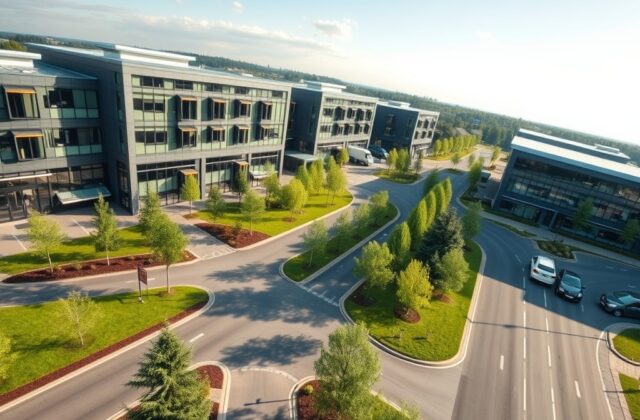
Modern commercial environments serve as more than just physical locations for employees to perform tasks; they function as integrated ecosystems designed to foster connectivity, productivity, and organizational growth. In West London, the campus-style development known as chiswick business park represents a significant evolution in how corporate real estate is conceptualized, moving away from isolated office blocks toward a more cohesive, service-oriented model.
Understanding the role of such a facility requires looking beyond its aesthetic appeal or transport links. It involves examining the interplay between architectural design, facility management, and the specific needs of high-growth technology and professional service firms. As businesses increasingly prioritize employee retention and collaboration, the infrastructure supporting these goals—such as managed green spaces and centralized logistics—becomes a critical competitive advantage.
. Key insights regarding chiswick business park provide valuable clarity for best results.
Defining chiswick business park: Core Concepts & Fundamentals
At its core, this site operates as an integrated commercial campus. Unlike traditional city-center office buildings, which often lack external communal areas, this development emphasizes a low-density, landscaped approach. The fundamental concept is to create a 'work-life' intersection where the physical environment actively supports the daily needs of the workforce.
According to the UK Government's guidance on workplace health and safety, providing environments that promote well-being is not merely a perk but an operational necessity. The design philosophy here centers on large floor plates and high-specification infrastructure that allows companies to scale their operations without frequently relocating, thereby stabilizing their long-term real estate strategy.
How It Actually Works: The Underlying Mechanics
Operationally, the campus functions through a centralized management structure that oversees maintenance, security, and community engagement. This centralized model ensures that the quality of service remains consistent across different occupiers, from multinational corporations to agile startups.
The mechanics involve high-speed digital connectivity and flexible building management systems that allow for energy efficiency and environmental monitoring. By centralizing these services, the management team can implement sustainability initiatives more effectively than if each individual business were responsible for its own utilities and facility upkeep.
Critical Drivers & Key Influencing Factors
Several factors drive the success and utility of this location. Proximity to major transport arteries, such as the North Circular and the M4, makes it a strategic node for firms needing access to both the central business district and international travel hubs like Heathrow Airport.
Furthermore, the integration of on-site amenities—such as fitness facilities, meeting spaces, and outdoor event areas—acts as a catalyst for professional networking. These features are designed to minimize the friction of the workday, allowing employees to manage personal and professional tasks within a single, secure environment.
. Key insights regarding chiswick business park provide valuable clarity for best results.
Practical Applications & Real-World Case Studies
For many occupiers, the primary application of the space is as a regional headquarters. The flexibility of the floor plates allows for modular interior design, which is essential for companies undergoing rapid digital transformation. For example, firms in the technology sector often utilize these spaces to build collaborative 'agile' work zones that would be impossible in older, more restrictive Victorian or early 20th-century London office buildings.
Case studies in commercial real estate development often highlight how this specific site successfully transitioned from industrial land use to a high-value knowledge economy hub. This transition mirrors broader economic shifts in the United Kingdom, where industrial heritage sites are repurposed to serve the needs of the service and tech sectors.
Common Misunderstandings & Hidden Nuances
One common misunderstanding is that such parks are merely 'offices in the suburbs.' In reality, the strategic intent is to provide a city-equivalent level of service and accessibility while offering the space and air quality that is often lacking in dense urban cores. Another nuance is the environmental impact; modern developments are held to strict BREEAM sustainability standards, which ensure that the footprint of the development is minimized through efficient building materials and energy-saving technology.
Strategic Best Practices for Long-Term Success
For businesses looking to establish a footprint at chiswick business park, success often depends on aligning organizational culture with the available amenities. Companies that maximize their use of communal space tend to see higher levels of employee engagement and inter-departmental collaboration. Additionally, leveraging the park's management team for event planning or facility upgrades can significantly reduce the administrative burden on internal HR and operations departments.
Key Takeaways: The Enduring Essentials
Ultimately, the value of this commercial environment lies in its ability to adapt to the changing nature of work. By prioritizing flexible infrastructure, sustainability, and human-centric design, the park remains a benchmark for corporate real estate. As the market continues to evolve, the focus will likely remain on enhancing digital integration and further reducing environmental impact, ensuring that the site continues to serve as a vital pillar of the West London business landscape.